Auction-to-Shipment Automation: How Car Exporters Remove Manual Handoffs
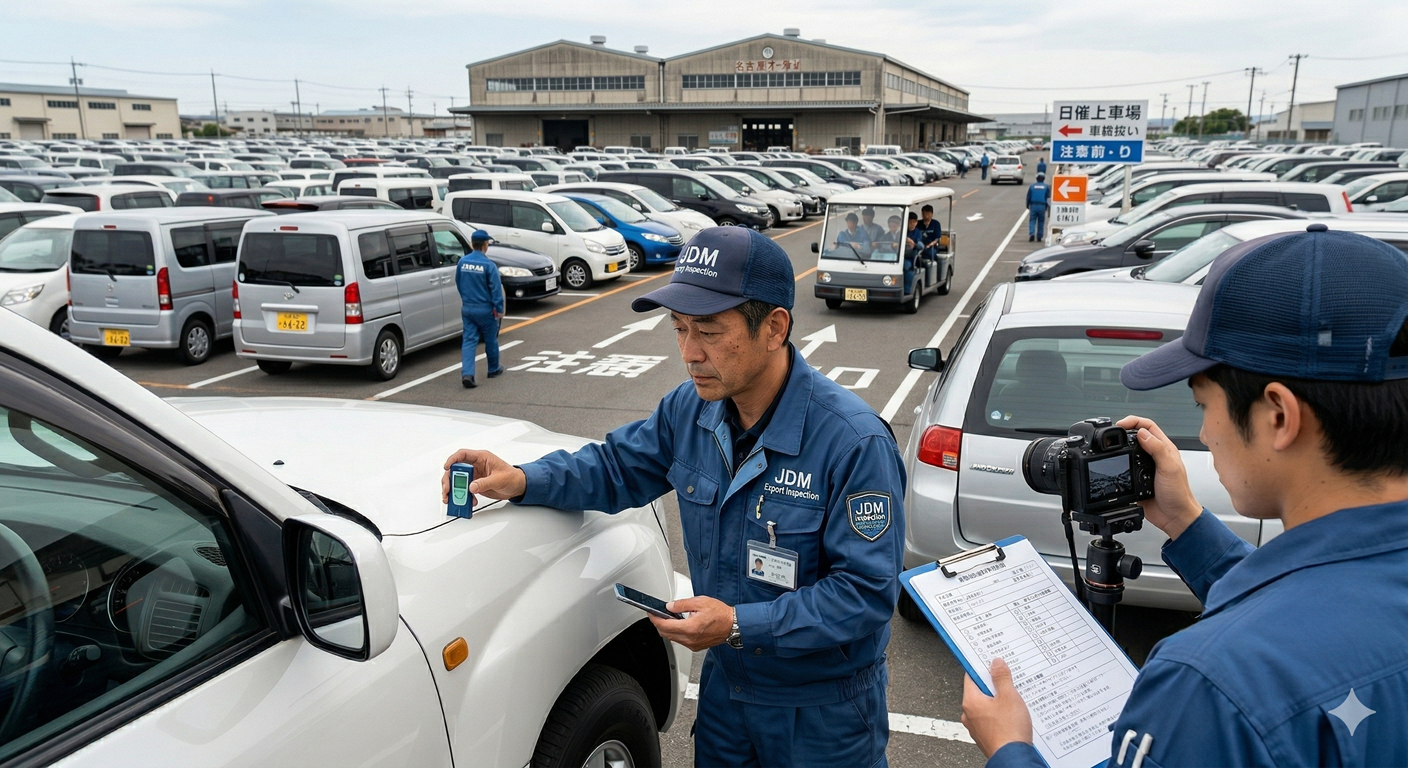
Auction-to-shipment automation matters because most exporter delay is not caused by one big failure. It is caused by small manual gaps between teams. The buyer knows the vehicle was secured, but operations does not receive the cost context cleanly. Operations creates the inventory record, but the yard does not update readiness consistently. The yard says the unit is available, but documents are incomplete. Logistics wants to book, but buyer confirmation or payment context is still buried in a chat thread. Each gap feels manageable in isolation. Together, they create a slow, fragile operation.
For Japanese used car exporters, those gaps become more expensive as volume, routes, and team size increase. The real purpose of workflow automation is not to make the business feel modern. It is to make handoffs reliable. A serious exporter platform should let one vehicle record move from auction purchase through stockyard, paperwork, booking, and buyer delivery without forcing each department to rebuild the same information in a new format.
This guide explains how to design that flow. It is written for exporters, branch managers, stockyard leads, auction buyers, and logistics coordinators who already understand the business and want a clearer operating model. If you want the broader automation overview first, read the car automation software checklist. If you want the full operational context around the trade itself, pair this guide with the car export process from Japan.
Core idea
Auction-to-shipment automation does not remove human responsibility. It removes re-entry, status ambiguity, and cross-team guesswork so each handoff becomes visible, timestamped, and easier to manage.
What auction-to-shipment automation actually covers
In exporter operations, auction-to-shipment automation starts the moment a vehicle becomes commercially relevant. That may be before the final bid, when your team is evaluating lots against destination demand and route economics, or it may begin immediately after purchase when the business needs to move fast on intake, cost capture, and document control. The important point is that the workflow does not begin at shipment booking. By the time booking starts, many of the expensive mistakes have already happened if the earlier handoffs were weak.
The full automated chain normally includes purchase capture, vehicle record creation, photo and condition attachment, stockyard location and preparation status, document readiness, shipping method decision, booking milestones, buyer-facing updates, and exception reporting. That makes automation both broader and more practical than many exporters first expect. It is not just one logistics feature. It is the operational bridge between acquisition and outbound execution.
This is also why exporters who only automate a single stage often remain frustrated. A tool that handles yard location but not document readiness still leaves logistics blind. A tool that handles booking but not purchase capture still leaves management uncertain about true margin and status. Real handoff reduction happens when the stages connect.
The seven handoffs where exporters lose the most time
1. Buyer or sourcing decision to recorded purchase
If the lot is bought but the cost context and buyer intention are not captured immediately, the operation starts with ambiguity. Teams then rely on memory or chat screenshots to reconstruct the deal.
2. Purchase record to inventory intake
Many exporters still recreate the vehicle manually after purchase. That duplicate entry wastes time and increases the chance that key data disappears between buying and operations.
3. Inventory to stockyard status
Units reach the yard, but the live system does not reflect actual location, readiness, or hold reasons consistently. That creates false confidence across teams.
4. Stockyard to document preparation
Operations may think a unit is close to shipment while documents remain incomplete or detached from the shipment timeline. This handoff often creates invisible delay.
5. Document readiness to booking
Logistics teams need a clear “ready to book” signal. Without one, bookings are based on assumptions, which leads to vessel pressure, rescheduling, and buyer dissatisfaction.
6. Booking to buyer communication
A unit can be booked correctly and still damage trust if the buyer learns key milestones too late or through inconsistent messages from different staff.
7. Operational status to management review
If management only sees polished month-end summaries, recurring delay patterns survive much longer than they should. Weekly exception visibility is part of the handoff chain too.
These are exactly the transitions that a mature car export automation software platform should connect. Not because the workflow needs more complexity, but because every department already depends on the same underlying truth whether the system recognizes it or not.
Start with one live vehicle and order record
If you want to remove manual handoffs, the workflow must revolve around one live operational record rather than separate departmental files. In export businesses, that usually means the vehicle record and the order context are linked from the start. The vehicle side should hold source, chassis or VIN, purchase data, inspection photos, location, readiness, and document state. The order side should hold buyer context, destination market, shipping method, milestone status, and any critical payment or approval notes.
This is more than a data-structure issue. It changes behavior. When all teams work around the same record, they stop debating which spreadsheet is current and start focusing on what action is actually needed. The buyer can check purchase context, operations can confirm status progression, the yard can update readiness, documents can reflect actual blockers, and logistics can decide whether booking should proceed. That is why the single-record model is one of the most important exporter workflow principles.
It also explains why many generic tools underperform in exporter use cases. They may offer tasks, notes, or storage, but they do not model the real connection between a purchased vehicle, its operational status, its shipment path, and its buyer obligations. For exporters, that connection is the workflow.
Stage 1: Automate the sourcing-to-purchase transition
The first stage is often underestimated because it feels like pure buying activity. In reality, it defines the commercial quality of everything that comes next. Auction-to-shipment automation starts by preserving purchase context accurately. Once your team buys a unit, the platform should immediately retain source details, acquisition cost layers, expected route, and buyer assignment if one exists. Without those elements, later teams have to infer commercial logic from partial evidence.
This stage should also support better pre-purchase discipline. That means maximum bid logic, destination-market fit, and cost assumptions should be visible enough that buyers are not operating from private calculation sheets alone. Exporters who want to improve this stage should also review how Japanese car auctions work for exporters and Japanese used car pricing for export. Those guides show why purchase decisions and downstream workflow cannot be separated cleanly.
When this stage is automated well, the rest of the organization stops relying on memory to understand what was bought, for whom, and under what commercial assumptions. That alone removes a large amount of silent friction.
Stage 2: Connect purchase to stockyard intake without duplicate entry
The next transition is where many exporters still lose clean data. A purchased unit arrives operationally as if it were new information instead of a continuation of the same record. Staff then create a second version in an inventory tool, yard sheet, or shared file, which introduces errors immediately. A better flow turns the purchase record into the live inventory record with no conceptual reset.
At this stage, the workflow should capture physical arrival, current yard location, inspection findings, photo updates, repair or preparation needs, and readiness stage. These are not just yard details. They decide when documents should move, when booking becomes realistic, and how confidently the buyer can be updated. Exporters who have repeated confusion here usually discover that the issue is not staff effort. It is that the workflow never established a clean inventory handoff.
That is why serious exporters often pair automation with a stronger car inventory management system for exporters. Inventory is not only stock control. It is the physical heartbeat of the outbound process.
Stage 3: Tie document readiness to operational reality
Document work is one of the easiest places for export businesses to feel “digitized” while still being operationally weak. A folder full of files is not document automation. Real automation means the system knows which documents matter for a given vehicle or shipment, what stage each item is in, who owns the next step, and whether a booking or release should proceed. In other words, document readiness must be visible as workflow status, not just as storage.
This is especially important because paperwork delays often create secondary damage. A booking may be tentatively planned, but the actual execution weakens because a required certificate or release-related detail remains incomplete. Staff then spend time chasing what should already have been visible. If you want a deeper treatment of this layer, the guide on car export documents from Japan explains why document control has to be connected to exporter workflow rather than treated as standalone admin.
When exporters make this stage explicit, logistics teams can finally trust the signal that a unit or shipment group is ready to move. That improves both speed and professionalism.
Stage 4: Make booking logic depend on real readiness, not assumptions
Shipment booking is where upstream weakness becomes expensive. If logistics must work from assumptions, the operation becomes reactive: rush checks, frantic confirmations, uncertainty around RoRo versus container, and more buyer pressure when dates change. Automation improves this stage by making the booking candidate list explicit. The system should show what is ready, what is blocked, and why. It should not force logistics staff to build that reality manually every time.
This stage also benefits from route-level context. Different destinations, shipping methods, and customer promises create different booking standards. That is why booking automation should sit beside buyer context, unit readiness, and document status rather than inside a separate logistics island. Exporters comparing shipping options can also use RoRo vs container shipping for cars to clarify how shipment method affects operational timing.
The outcome should be simple: logistics sees fewer false-ready units, management sees fewer avoidable booking misses, and buyers receive more stable expectations because the internal logic is tighter.
Stage 5: Treat buyer communication as part of the workflow, not as an afterthought
Export businesses often talk about workflow automation as if it ends once the vessel is booked. In reality, one of the biggest competitive differences appears in how buyers experience the process. Clean updates make the exporter look disciplined. Delayed or inconsistent updates make even a technically successful shipment feel unreliable. That is why buyer communication should be driven by operational milestones rather than by whichever staff member remembers to send a message.
A strong buyer-update flow should tell the customer what changed, when it changed, and what it means for the next expected milestone. This is where automation supports trust. The message does not need to be robotic. It needs to be timely and consistent. If the unit entered the yard, if documents are underway, if the booking is confirmed, if the vessel departed, the buyer should not be dependent on manual internal follow-up to learn that reality. The related guide on car export buyer management explains why customer communication is not separate from operational control. It is one of the places where control becomes visible to the market.
When exporters improve this stage, they usually notice a reduction in repetitive buyer questions, faster internal response quality, and fewer trust issues around delay management.
How exception management should work in an automated export workflow
Every exporter workflow eventually hits exceptions: missing paperwork, damage found in yard, transport delay, payment lag, buyer change, booking constraint, or inconsistent source data. The question is not whether exceptions exist. The question is whether the system makes them visible early enough that management can act before they turn into customer or margin damage. This is where many teams learn that automation without exception design is incomplete.
A useful exception model should assign owners, timestamps, and escalation logic. If a unit has been in a blocked state too long, the problem should stop being private knowledge. If the booking stage depends on a missing requirement, the dependency should be explicit. If a buyer update is overdue after a major milestone, the system should show that gap. Exception management is not about punishing staff. It is about preventing hidden delay from being normalized inside the business.
Exporters who build this layer well usually feel calmer even at higher volume because the operational noise becomes more structured. Management stops investigating blind and starts responding to visible signals.
The metrics management should review every week
Auction-to-shipment automation is only real if it changes management visibility. At minimum, exporters should review units purchased, units at yard, units blocked by documents, units ready for booking, units booked, units departed, average stock age, and buyer-update lag. Some businesses also need route-specific metrics, payment-stage visibility, and exception age by department. The exact mix will vary, but the principle does not: if workflow automation is working, management should see the chain more clearly week by week.
This reporting rhythm changes behavior because delay becomes measurable instead of anecdotal. Teams begin to see where a process repeatedly slows down, which route creates more friction, which stage generates the most rework, and which roles need clearer ownership. That is why reporting is not merely a dashboard feature. It is part of the workflow control system. If you have to wait for manual exports to understand your own operation, the workflow is still too dependent on manual effort.
This is one reason the best exporter platforms include reporting as a core operational layer rather than as a later add-on.
How better handoffs improve buyer trust and internal speed
One of the most underestimated benefits of workflow automation is the change it creates in perceived reliability. Buyers rarely see your internal process directly, but they feel its quality through timing, accuracy, and confidence. When milestones are late, contradictory, or unclear, they assume the exporter is disorganized. When updates are timely and consistent, they assume the exporter is in control. That difference affects repeat business even when the physical shipment outcome is ultimately the same.
The same improvement appears internally. Teams respond faster when they are not first forced to reconstruct context. Logistics works faster when document readiness is explicit. Operations works faster when purchase context is already attached. Managers respond faster when exceptions are visible instead of hidden in chat history. In other words, workflow automation is not only about reducing admin time. It improves response quality because staff can act from a more complete view of reality.
This is why exporters who strengthen handoffs often feel a broader change than they expected. The system does not only save minutes. It improves confidence in daily decisions across the whole business.
Where exporters still lose time after booking
Many teams think the hardest part ends once a vehicle is booked, but manual loss often continues between booking confirmation and departure. This stage still depends on final document checks, release readiness, container or vessel coordination, and reliable milestone communication. If the workflow does not connect those events clearly, teams end up rechecking the same unit several times even after a booking exists. That is why strong auction-to-shipment automation should not stop at booking creation. It should continue through departure control.
This matters because buyers interpret booked units as stable commitments. If updates become uncertain after booking, the exporter looks less reliable precisely when customer expectations become more specific. Internally, post-booking confusion also affects yard planning and management forecasting because teams cannot distinguish between booked-and-ready units and booked-but-risky units. A structured workflow should make that difference visible immediately.
In practice, exporters get better results when the post-booking stage includes explicit owners, exception alerts, and final milestone triggers. That keeps the workflow consistent all the way to departure instead of letting the last stretch fall back into manual follow-up.
External references and trade context
Automation improves internal handoffs, but exporters still work inside broader customs, transport, and market conditions. Teams should therefore keep an eye on external references such as JETRO, Japan Customs, and UNCTAD transport and trade logistics resources. Those sources will not design your workflow for you, but they help exporters keep internal process decisions connected to the real logistics environment around shipment execution.
The practical takeaway is that internal discipline and external awareness work best together. Workflow automation helps your team move with less friction; trade context helps your team move with better judgment.
Suggested image alt text for this article
- • Auction-to-shipment automation workflow for Japanese used car exporters
- • Export operations dashboard linking auction purchase, stockyard status, documents, and shipping milestones
- • Car export workflow map showing handoffs from buying to vessel departure
Related reading for process automation
Car automation software checklist
See what exporters should automate first before they expand workflow depth.
Car export workflow automation bottlenecks
Use the bottleneck guide to see which delays deserve attention first.
Car export process from Japan
Match automation decisions to the real exporter process from purchase to delivery.
Car export documents from Japan
Understand why paperwork has to be part of the live workflow, not a separate admin task.
Related Solutions
See the platform pages behind this workflow
Car export automation software
Review how SmartApp connects workflow automation across teams and stages.
Car auction management software
See how sourcing and purchase control feed the workflow from the first decision.
Car inventory management system
Explore the inventory and yard visibility layer that supports shipment readiness.
Frequently asked questions
What is auction-to-shipment automation in a car export business?
Which handoffs usually create the biggest exporter delays?
Does workflow automation help moderate-volume exporters too?
Want to see auction-to-shipment workflow in one live system?
The real test of exporter software is whether one record can move cleanly from purchase to yard, documents, booking, and buyer delivery.
If that is the workflow you need to strengthen, review the SmartApp automation flow with your actual operational questions in mind.
Book a Free Demo