Introduction
Japanese car auctions are the backbone of the global used car export industry. Every week, hundreds of thousands of vehicles are listed across auction houses in Japan, offering exporters access to a wide variety of cars at competitive prices.
For anyone involved in car export, understanding how Japanese car auctions work is essential. Whether you are a beginner or an experienced exporter, mastering the auction process can significantly improve your buying decisions and profitability.
This complete guide will walk you through everything — from auction types and bidding strategies to inspection sheets and common mistakes.
🌍What Are Japanese Car Auctions?
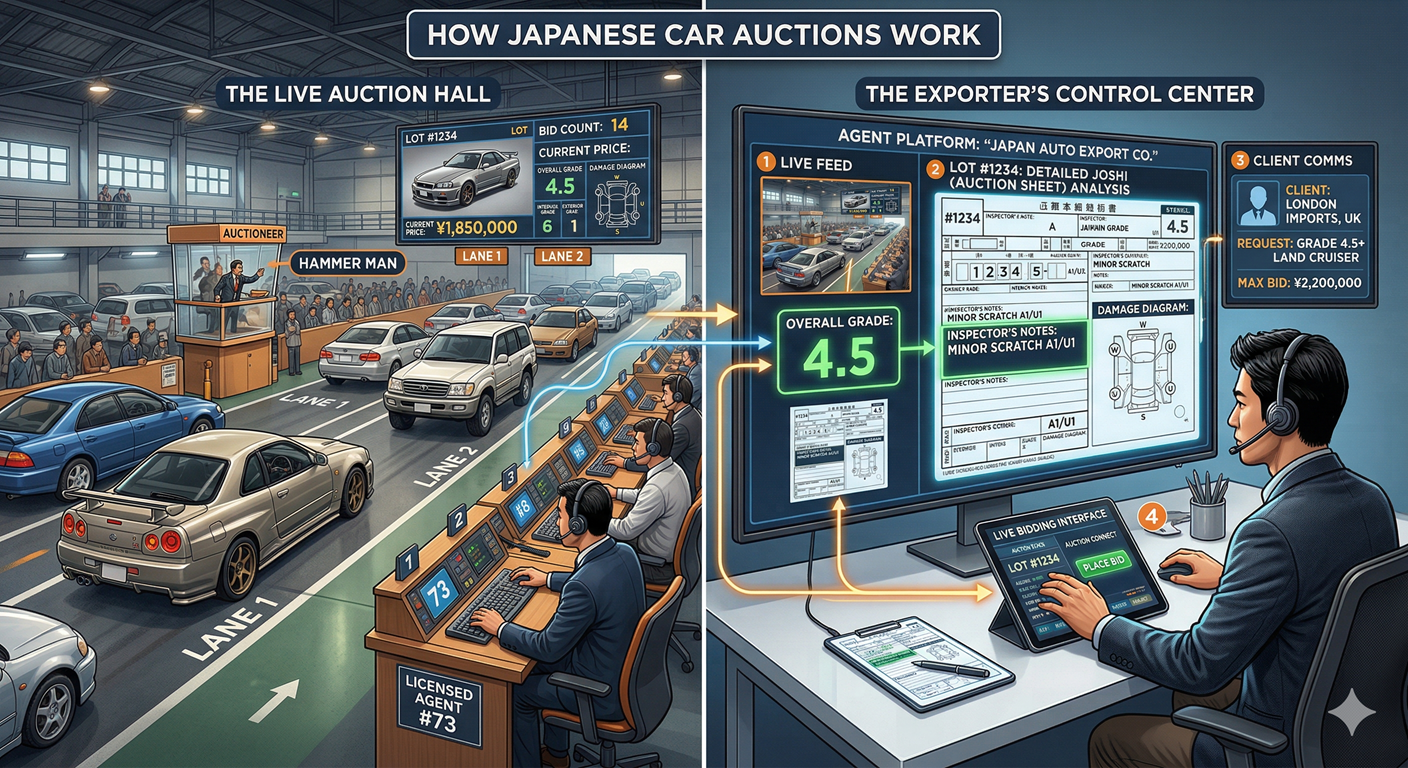
Japanese car auctions are large-scale marketplaces where vehicles are sold to registered buyers through a bidding system.
Key Characteristics
- Thousands of cars listed daily
- Strict inspection and grading systems
- Competitive pricing
- Fast-paced bidding environment
👉 Only licensed dealers or registered exporters can participate directly.
🏢Major Auction Houses in Japan
Japan has several well-known auction groups:
Each auction house has its own system, but the core process is similar.
🚗Types of Vehicles Available
You can find almost every type of vehicle:
👉 This variety makes auctions ideal for exporters targeting different markets.
🔄How the Auction Process Works (Step-by-Step)
Vehicle Listing
Sellers (dealers, companies, or individuals) submit vehicles to auction houses. Each listing includes:
Inspection & Grading
Before auction, vehicles are inspected by professionals.
| Grade | Condition |
|---|---|
| S / 6 | Almost new |
| 5 / 4.5 | Excellent condition |
| 4 / 3.5 | Good condition |
| 3 / RA / R | Damaged or repaired |
👉 The grading system helps buyers quickly assess quality.
Auction Day Bidding
Vehicles are listed in sequence, each auctioned within seconds. Buyers place bids in real time.
👉 Highest bidder wins the vehicle.
Winning & Confirmation
If you win, the auction confirms the sale, provides a payment deadline, and the vehicle moves to export processing.
👉 Some vehicles have a reserve price — the seller must approve the final bid.
Payment & Ownership Transfer
Buyers must:
- Complete payment within a few days
- Pay auction fees and taxes
- Receive ownership documents
Export & Shipping
After purchase:
- Vehicle is transported to port
- Export documents are prepared
- Shipping arranged (RoRo or container)
📄Understanding Auction Inspection Sheets
The inspection sheet is one of the most important documents.
It Includes
- Overall grade
- Interior and exterior condition
- Engine status
- Mileage verification
- Repair history
Symbols & Notes
- Scratches, dents, rust marks
- Repaired areas
- Replacement parts
👉 Learning to read this sheet correctly is critical.
💡Bidding Strategies for Exporters
⚠️Common Mistakes to Avoid
Ignoring Inspection Reports
Leads to buying damaged vehicles unknowingly.
Overbidding
Reduces profit margins and defeats the purpose of auction sourcing.
Poor Planning
Buying vehicles without considering demand in your target market.
Missing Payment Deadlines
Can result in penalties or account suspension from the auction house.
⚙️How Software Improves Auction Management
Modern exporters use car export software to simplify auction operations.
👉 This improves efficiency and reduces errors.
📈Future of Japanese Car Auctions
The industry is evolving toward:
👉 Exporters who adapt early will benefit the most.
❓FAQs
Can anyone participate in Japanese car auctions?
No, you need a registered exporter or agent to access auctions directly.
Are auction cars reliable?
Yes, due to strict inspection systems, but always verify the inspection report before bidding.
What is the best grade to buy?
Grade 4 to 4.5 offers a good balance between price and quality for most markets.
🔥Conclusion
Understanding how Japanese car auctions work is essential for success in the car export business. From vehicle selection to bidding strategies, every step plays a critical role in profitability.
By mastering the auction process and using the right tools, you can make smarter decisions, reduce risks, and grow your export business efficiently.
👉 To manage auctions, inventory, and shipping in one place, consider using a complete solution like CarDeal365.
Book a Free Demo